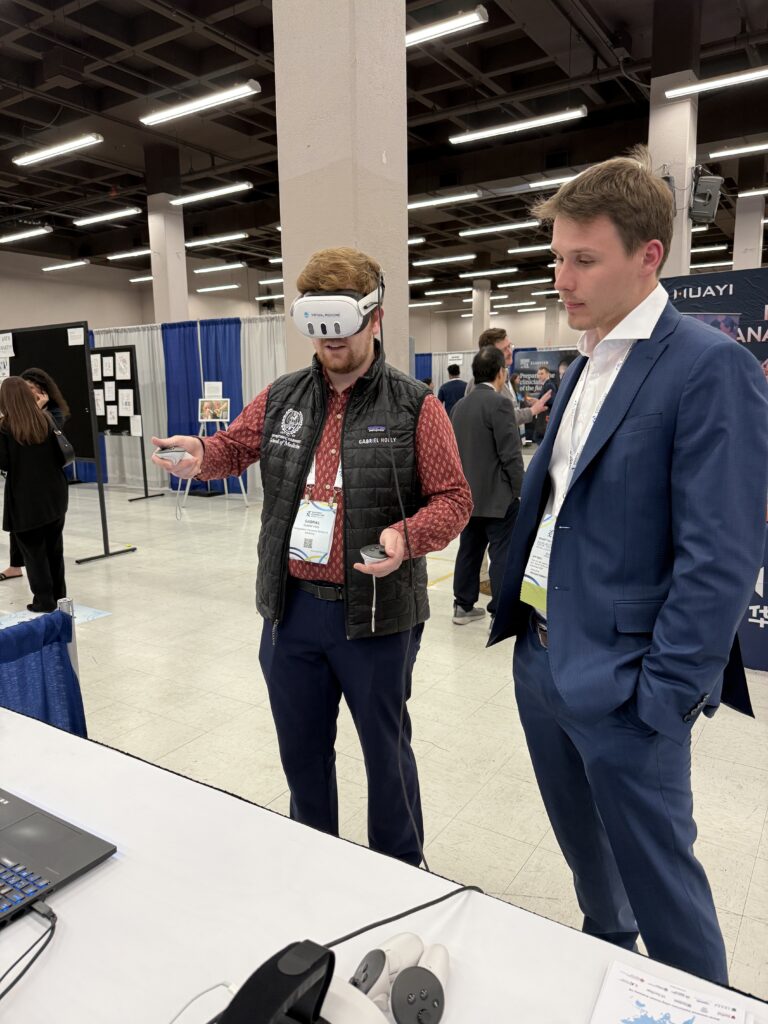
A new peer-reviewed study published in the European Journal of STEM Education explored how a group of pre-service life-science teachers used Human Anatomy VR to study anatomy and reflect on its potential for their future teaching.
The research comes from Sol Plaatje University (South Africa) and was guided by Kolb’s Experiential Learning Theory, focusing on concrete experience, reflection, and real classroom application.
From “spectator” to “participant”
Traditional diagrams can make circulation or cell biology feel abstract. In this study, participants described becoming part of the scene, travelling as an “oxygen molecule” through cardiac chambers or standing eye-level with microscopic structures, turning static concepts into living processes they could track and explain. That shift from 2D observation to embodied exploration helped clear up common misconceptions, like the differences between oxygenated and deoxygenated blood.
Eye-tracking data reinforced what participants reported. When exploring brain physiology, fixation time clustered on the cerebrum and frontal lobe, indicating focused, purposeful attention rather than distraction by surrounding visuals, evidence of active learning in the moments that matter.
Pedagogy
The project wasn’t only about mastering anatomy; it was about becoming classroom-ready with modern pedagogy. After their VR sessions, future teachers sketched lesson ideas that were more inquiry-driven, visual, and student-led. Several reflected on “creating special experiences where learners can feel science,” signalling a mindset shift from content delivery to experiential, learner-centred teaching.
That’s exactly where Kolb’s cycle shines: concrete VR experiences, reflective debriefs, and planning for classroom experimentation. The study situates Human Anatomy VR as a practical vehicle for experiential learning, bridging content knowledge with the kinds of digital pedagogy skills that schools are asking new teachers to bring on day one.
What this means for faculties and schools
For educators, the takeaway is straightforward: VR can simultaneously build subject mastery and pedagogical confidence. Participants reported clearer mental models for the heart, circulation, brain and cells, and they translated those insights into concrete lesson ideas aligned with student-centred practice. This dual benefit helps programs modernize curricula without sacrificing rigor.
The study is also honest about implementation. Some participants experienced motion sickness, a known barrier in early VR use. The recommendation is gradual exposure and shorter sessions that lengthen over time, a rollout pattern we also advise for first deployments.
Article:
Botes, W. (2025). Pre-Service Science Teachers’ Reflections on Using Virtual Reality Open Educational Resources in Life Science Education. European Journal of STEM Education, 10(1), 17. Published October 2, 2025.