As anatomy education continues to evolve, institutions are looking for tools that do more than simply look impressive. They need solutions that fit academic workflows, support student understanding, and show real results. A newly published peer-reviewed pilot study in Otolaryngology–Head and Neck Surgery journal offers promising evidence that Human Anatomy VR can do exactly that in one of the most complex areas of medical education: head and neck anatomy.
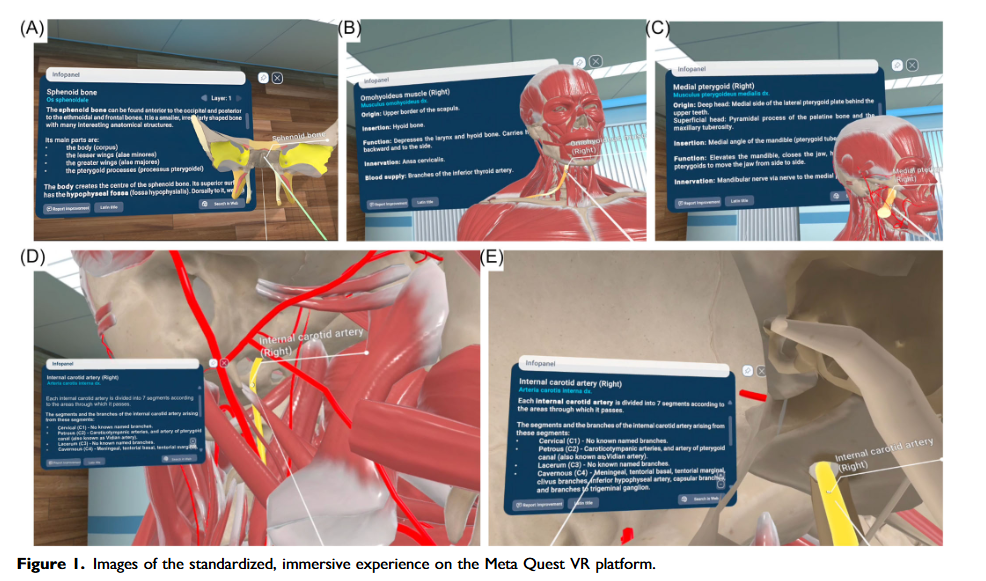
In the study, “Next Dimension Medical Education: A Pilot Study Exploring Virtual Reality in Head and Neck Anatomy,” the authors evaluated a structured VR learning experience at Louisiana State University Health Shreveport. The educational platform used was Human Anatomy VR for Institutions on Meta Quest 3, with the authors creating a standardized instructional script for each participant.
The study included 21 medical students who had already completed formal cadaveric anatomy education. Students first completed a multiple-choice quiz, then participated in a guided VR session, and finally completed a post-session quiz. The objective was to evaluate whether the VR intervention could improve understanding of head and neck anatomy, while also measuring confidence, satisfaction, and whether prior exposure to VR or gaming influenced outcomes.
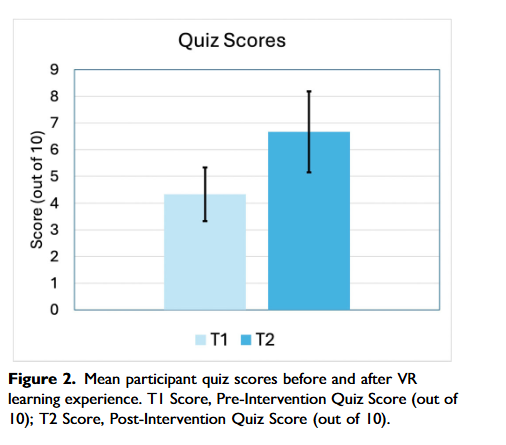
The findings were impressive. Average quiz scores improved from 4.33 to 6.67 out of 10 after the VR session, an improvement in quiz scores of 54%. Just as importantly, the improvement was consistent regardless of whether students had prior experience with virtual reality or video games. In practical terms, that suggests the platform delivered educational value not only to tech-savvy users, but also to learners coming in with little or no immersive technology background.
Student perception data also pointed in the same direction. The study reports that 90.48% of participants felt more confident in their head and neck anatomy knowledge after the experience. Students rated the VR session highly for control, sensory immersion, and realism, while reporting minimal distraction or frustration. For institutions evaluating new teaching tools, that combination matters. It is not enough for students to enjoy a platform. The platform also needs to feel intuitive, academically useful, and practical in a real learning environment. This study shows Human Anatomy VR can meet that standard.
From an academic standpoint, one of the most valuable aspects of this publication is its realism. The students were not beginners to anatomy, and the VR session was not presented as a replacement for traditional teaching. Instead, the study supports a more credible and useful conclusion: Human Anatomy VR can serve as a high-value adjunct to existing anatomy education. That is exactly where many institutions see the greatest opportunity today, using immersive technology to reinforce spatial understanding, improve engagement, and give students access to repeatable 3D exploration outside the limits of conventional lab time.
For medical schools, nursing programs, and health sciences faculties exploring the role of immersive learning, this study offers a practical signal. Human Anatomy VR is not only capable of creating an engaging experience. It can also contribute to better understanding, stronger confidence, and a more modern anatomy learning environment when integrated thoughtfully into curriculum.
Study doi: https://doi.org/10.1002/oto2.70217
