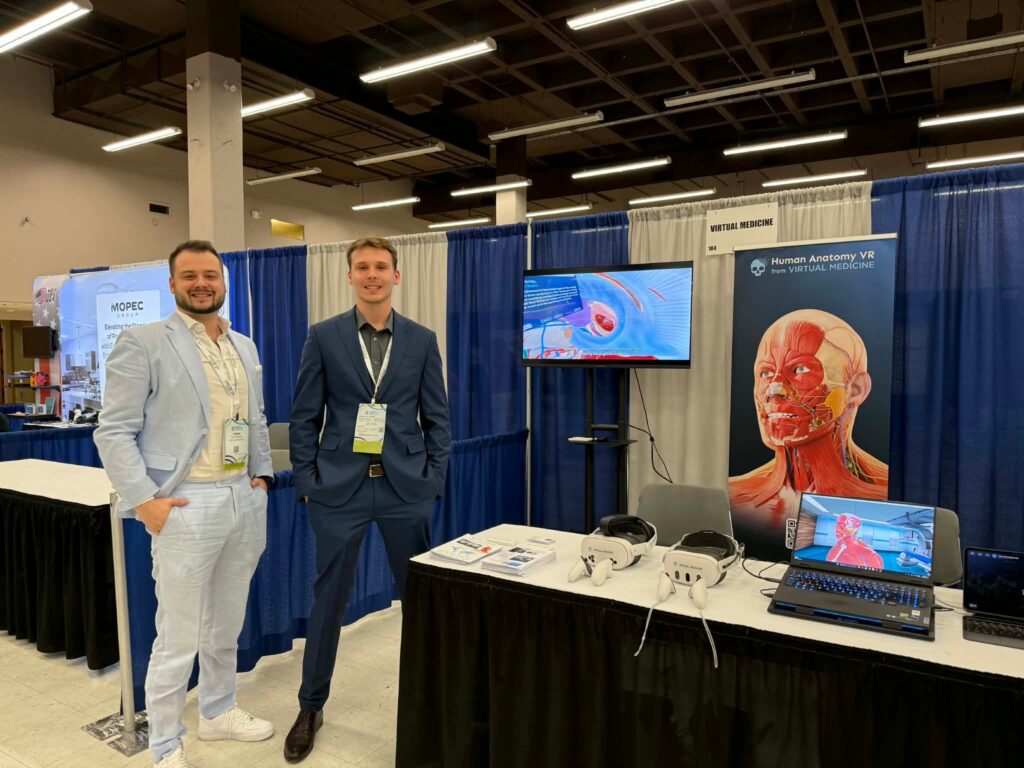
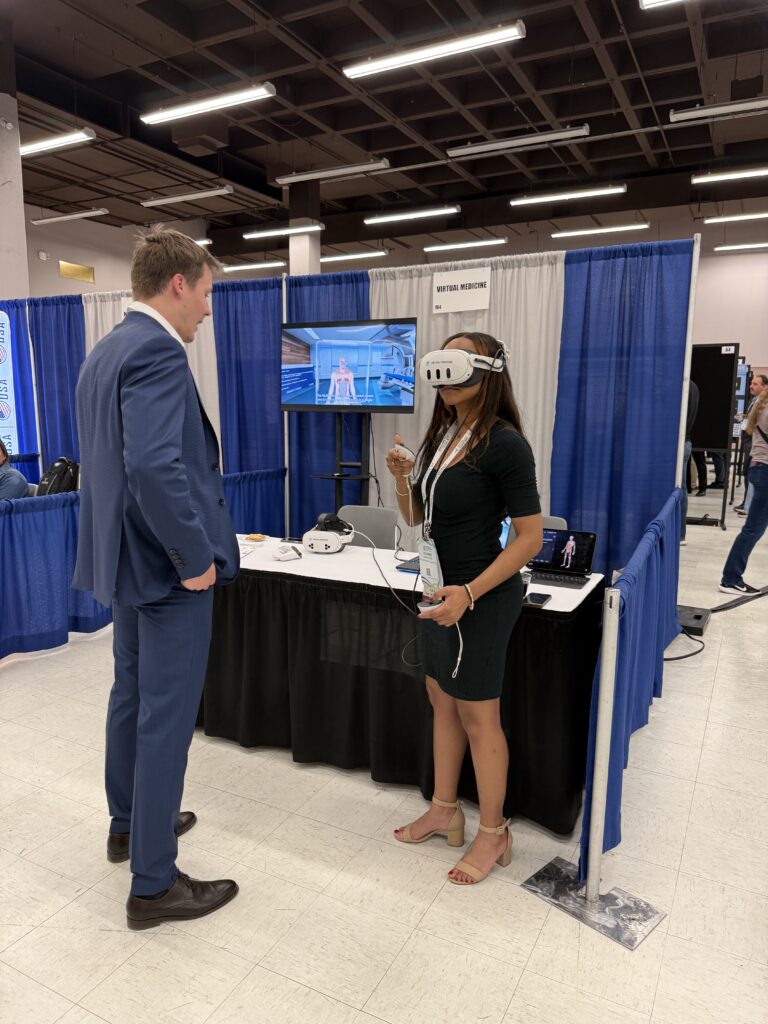
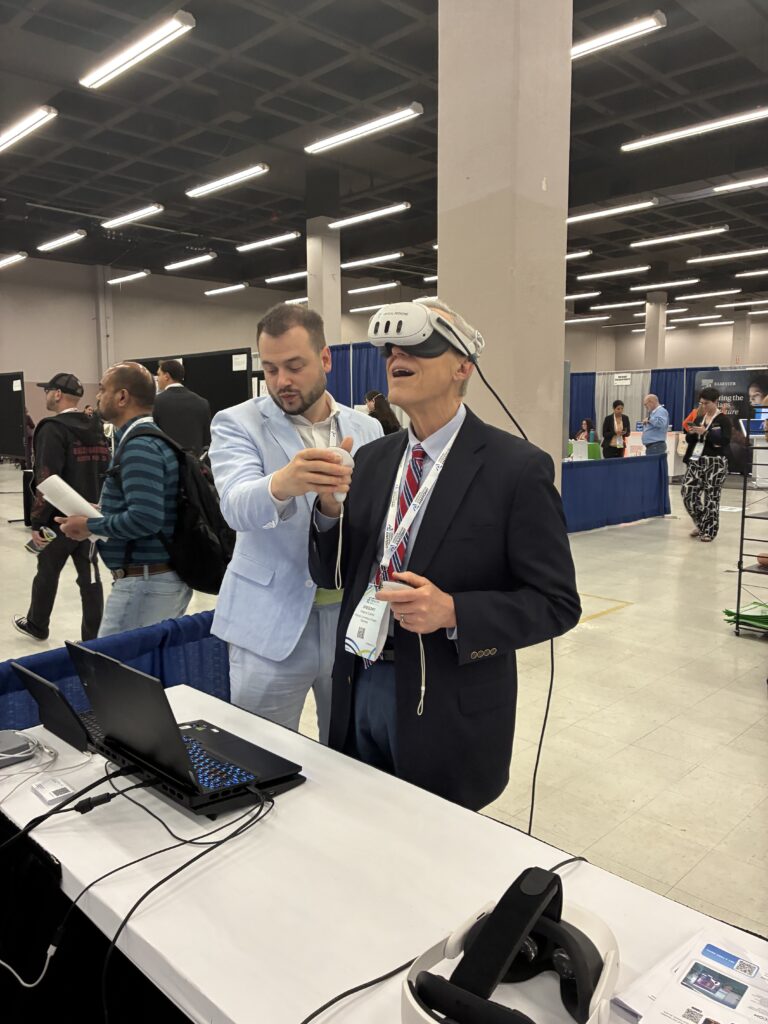
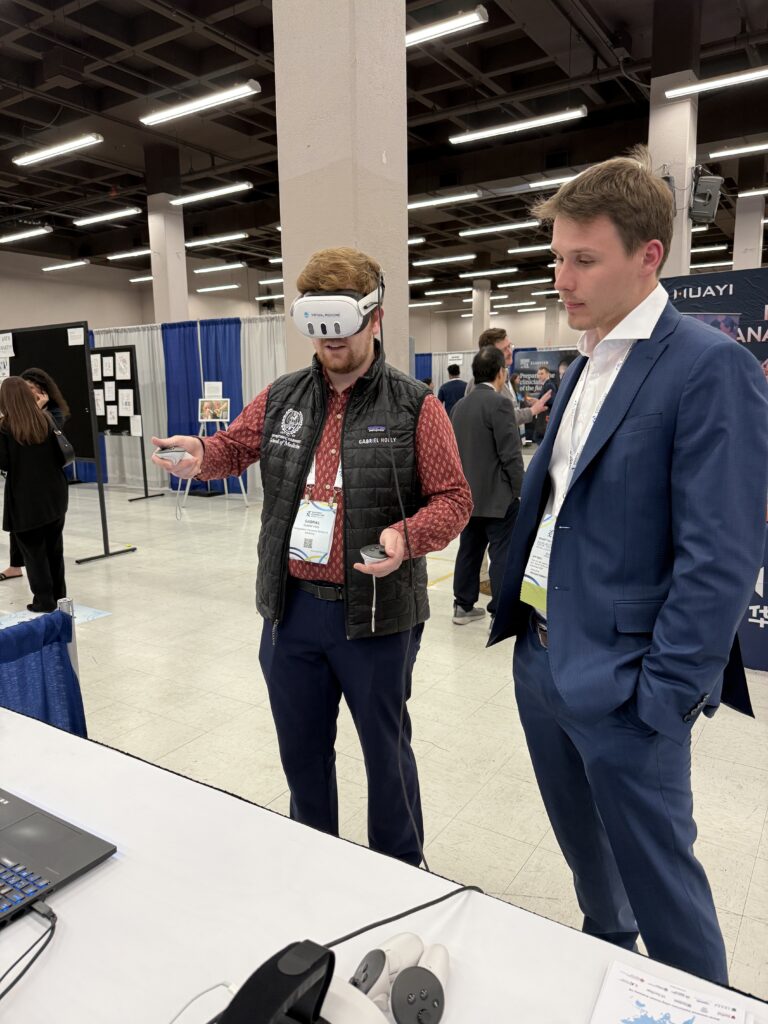
Virtual Medicine was pleased to exhibit at Anatomy Connected 2026 in Albuquerque, New Mexico, from April 17 to 20.
The event gave our team a great opportunity to reconnect with clients, meet new educators, researchers, and healthcare professionals, and take part in conversations about the future of anatomy education.
During the conference, we presented hands-on demos of Human Anatomy VR and AR Anatomy and spoke with attendees about how immersive tools can support teaching, learning, and engagement in anatomy.
We are grateful to everyone who visited our booth and shared their time, feedback, and perspective with us. Events like this continue to be valuable for building strong relationships and staying connected to the needs of the academic and medical education community.
This segment further highlights the value of Human Anatomy VR as a tool for explaining complex medical topics in a clear and engaging way. By turning anatomy into an interactive 3D experience, it supports more effective education not only for medical students and healthcare professionals, but also for patients and the general public.
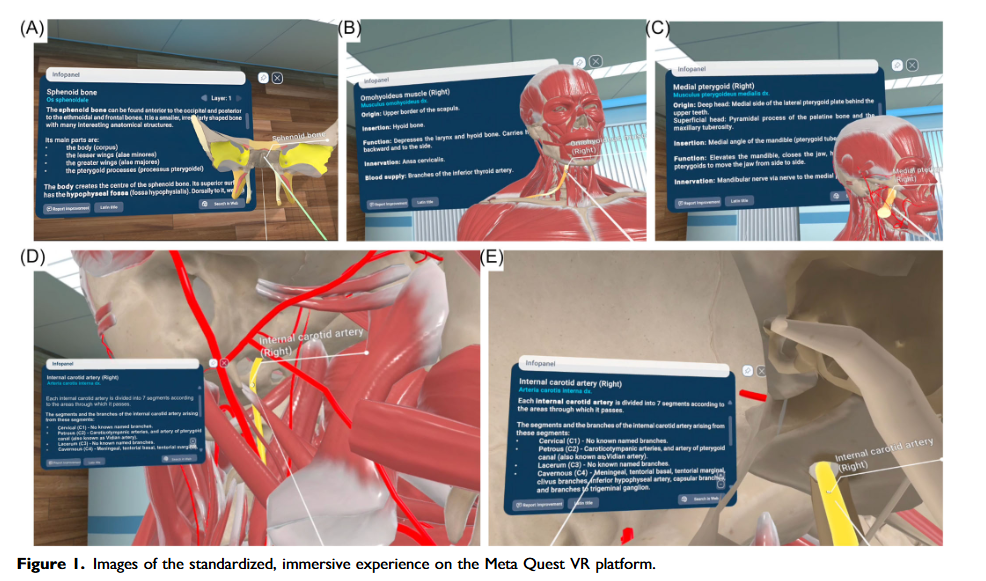
As anatomy education continues to evolve, institutions are looking for tools that do more than simply look impressive. They need solutions that fit academic workflows, support student understanding, and show real results. A newly published peer-reviewed pilot study in Otolaryngology–Head and Neck Surgery journal offers promising evidence that Human Anatomy VR can do exactly that in one of the most complex areas of medical education: head and neck anatomy.
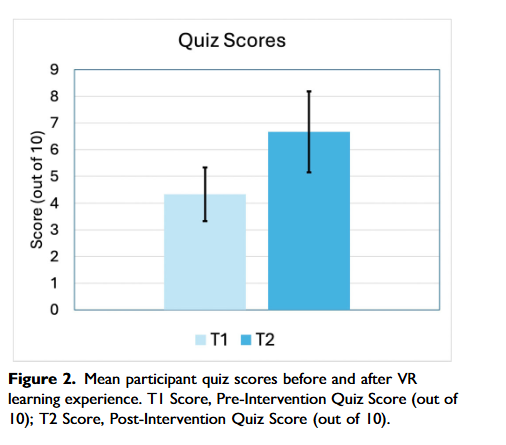
The study included 21 medical students who had already completed formal cadaveric anatomy education. Students first completed a multiple-choice quiz, then participated in a guided VR session, and finally completed a post-session quiz. The objective was to evaluate whether the VR intervention could improve understanding of head and neck anatomy, while also measuring confidence, satisfaction, and whether prior exposure to VR or gaming influenced outcomes.
The findings were impressive. Average quiz scores improved from 4.33 to 6.67 out of 10 after the VR session, an improvement in quiz scores of 54%. Just as importantly, the improvement was consistent regardless of whether students had prior experience with virtual reality or video games. In practical terms, that suggests the platform delivered educational value not only to tech-savvy users, but also to learners coming in with little or no immersive technology background.
Student perception data also pointed in the same direction. The study reports that 90.48% of participants felt more confident in their head and neck anatomy knowledge after the experience. Students rated the VR session highly for control, sensory immersion, and realism, while reporting minimal distraction or frustration. For institutions evaluating new teaching tools, that combination matters. It is not enough for students to enjoy a platform. The platform also needs to feel intuitive, academically useful, and practical in a real learning environment. This study shows Human Anatomy VR can meet that standard.
From an academic standpoint, one of the most valuable aspects of this publication is its realism. The students were not beginners to anatomy, and the VR session was not presented as a replacement for traditional teaching. Instead, the study supports a more credible and useful conclusion: Human Anatomy VR can serve as a high-value adjunct to existing anatomy education. That is exactly where many institutions see the greatest opportunity today, using immersive technology to reinforce spatial understanding, improve engagement, and give students access to repeatable 3D exploration outside the limits of conventional lab time.
For medical schools, nursing programs, and health sciences faculties exploring the role of immersive learning, this study offers a practical signal. Human Anatomy VR is not only capable of creating an engaging experience. It can also contribute to better understanding, stronger confidence, and a more modern anatomy learning environment when integrated thoughtfully into curriculum.
A new classroom study, published by the Education Management Institute in The Education Professional’s Guide (Journal of Successful Educators), compared a VR-based anatomy lesson with the traditional teaching approach. The result was a clear improvement in both test performance and student engagement when students explored the heart in Human Anatomy VR.
How Human Anatomy VR was used in the study
The pilot focused on the circulatory system, specifically the heart, and compared two 10th-grade classes of 30 students:
Control group: a traditional lesson using teacher explanation, textbook material, and posters
VR group: a lesson built around Human Anatomy VR, run in small teams rotating through VR
Inside Human Anatomy VR, students:
Manipulated a detailed 3D heart model
Separated chambers to inspect internal structures
Observed valves opening and closing in sync with the heartbeat
Completed a structured observation worksheet and identified five key anatomical structures
Both groups took the same short pre-test and the same final written test. The VR group also completed a short anonymous feedback questionnaire after the session.
Results
The study reported measurable differences in learning outcomes:
Average test score: 8.90 (VR) vs 7.45 (traditional)
Pass rate: 100% (VR) vs 89% (traditional)
Top grades (9 to 10): 12 students (VR) vs 5 students (traditional)
On a question requiring the blood flow pathway through the heart: 92% correct and complete (VR) vs 65% (traditional)
Student feedback also showed a strong engagement lift:
96% agreed the lesson was more engaging than a normal biology class
88% agreed they understood the heart’s structure and function better after the VR experience
Advantages of learning Anatomy in immersive 3D
Flexible and scalable teaching module: Individual study in XR, Anatomy Presentation, interactive anatomy labs, and high-capacity lectures in XR.
More accurate 3D understanding of anatomy: Students can rotate, isolate, and step inside structures, revealing depth, orientation, and relationships that 2D images often fail to convey. This builds a clearer, more durable mental map of anatomy
Deeper understanding of function, not just memorization: Instead of learning labels in isolation, learners can watch anatomy in action, such as muscle movement, valve dynamics, and blood flow, and connect each step of a process to the structures responsible for it
Get two immersive anatomy apps in one bundle. The Anatomy VR Bundle brings together Human Anatomy VR and Animal Anatomy VR, giving you detailed, high-precision 3D models of both human and animal anatomy in a single purchase.
Explore bones, muscles, organs, vessels, and nerves. Isolate structures, switch layers, and learn with clear labels and descriptions. Ideal for students, enthusiasts, and pet owners who want a hands-on, engaging way to explore anatomy.
Personal Human Anatomy VR Is Now 25% Off for the Holidays
This holiday season, Personal Human Anatomy VR is available with a 25% discount on Meta Quest and the PlayStation Store.
Personal Human Anatomy VR offers an immersive way to explore the human body in full 3D. With thousands of detailed structures and intuitive interaction tools, it is ideal for students, medical enthusiasts, and anyone curious about how the human body works.
Whether you are preparing for exams, refreshing your knowledge, or just exploring anatomy out of personal interest, the holiday sale is the best opportunity to get started!
You can now purchase Personal Human Anatomy VR at 25% off on Meta Quest and on the PlayStation Store for a limited time during the holidays.
We’re excited to share that in a new video segment, ESPN‘s NFL Analyst Stephania Bell takes an inside look at the Anatomy of a Hamstring Injury using Human Anatomy VR. 🏈
Hamstring injuries are among the most common across all sports, and Human Anatomy VR provides an immersive, effective way to explore how and why they occur.
Discover how Human Anatomy VR can empower students, educators, athletes and professionals.
A new peer-reviewed study published in the European Journal of STEM Education explored how a group of pre-service life-science teachers used Human Anatomy VR to study anatomy and reflect on its potential for their future teaching.
The research comes from Sol Plaatje University (South Africa) and was guided by Kolb’s Experiential Learning Theory, focusing on concrete experience, reflection, and real classroom application.
From “spectator” to “participant”
Traditional diagrams can make circulation or cell biology feel abstract. In this study, participants described becoming part of the scene, travelling as an “oxygen molecule” through cardiac chambers or standing eye-level with microscopic structures, turning static concepts into living processes they could track and explain. That shift from 2D observation to embodied exploration helped clear up common misconceptions, like the differences between oxygenated and deoxygenated blood.
Eye-tracking data reinforced what participants reported. When exploring brain physiology, fixation time clustered on the cerebrum and frontal lobe, indicating focused, purposeful attention rather than distraction by surrounding visuals, evidence of active learning in the moments that matter.
Pedagogy
The project wasn’t only about mastering anatomy; it was about becoming classroom-ready with modern pedagogy. After their VR sessions, future teachers sketched lesson ideas that were more inquiry-driven, visual, and student-led. Several reflected on “creating special experiences where learners can feel science,” signalling a mindset shift from content delivery to experiential, learner-centred teaching.
That’s exactly where Kolb’s cycle shines: concrete VR experiences, reflective debriefs, and planning for classroom experimentation. The study situates Human Anatomy VR as a practical vehicle for experiential learning, bridging content knowledge with the kinds of digital pedagogy skills that schools are asking new teachers to bring on day one.
What this means for faculties and schools
For educators, the takeaway is straightforward: VR can simultaneously build subject mastery and pedagogical confidence. Participants reported clearer mental models for the heart, circulation, brain and cells, and they translated those insights into concrete lesson ideas aligned with student-centred practice. This dual benefit helps programs modernize curricula without sacrificing rigor.
The study is also honest about implementation. Some participants experienced motion sickness, a known barrier in early VR use. The recommendation is gradual exposure and shorter sessions that lengthen over time, a rollout pattern we also advise for first deployments.
We are proud to share another milestone for Virtual Medicine. ESPN — the leading sports network in the United States — has featured Human Anatomy VR during live NFL coverage.
In the segment, ESPN’s injury analyst Stephania Bell (PT) explains Joe Burrow’s turf toe injury with the help of our Human Anatomy VR platform. This marks an exciting step forward in bringing sports medicine, innovation, and immersive education to millions of viewers worldwide.
You can watch the full ESPN feature right here:
Discover how Human Anatomy VR can empower students, educators, and professionals.